Sell · a shop that lists itself
Your best work, listed the moment it’s done.
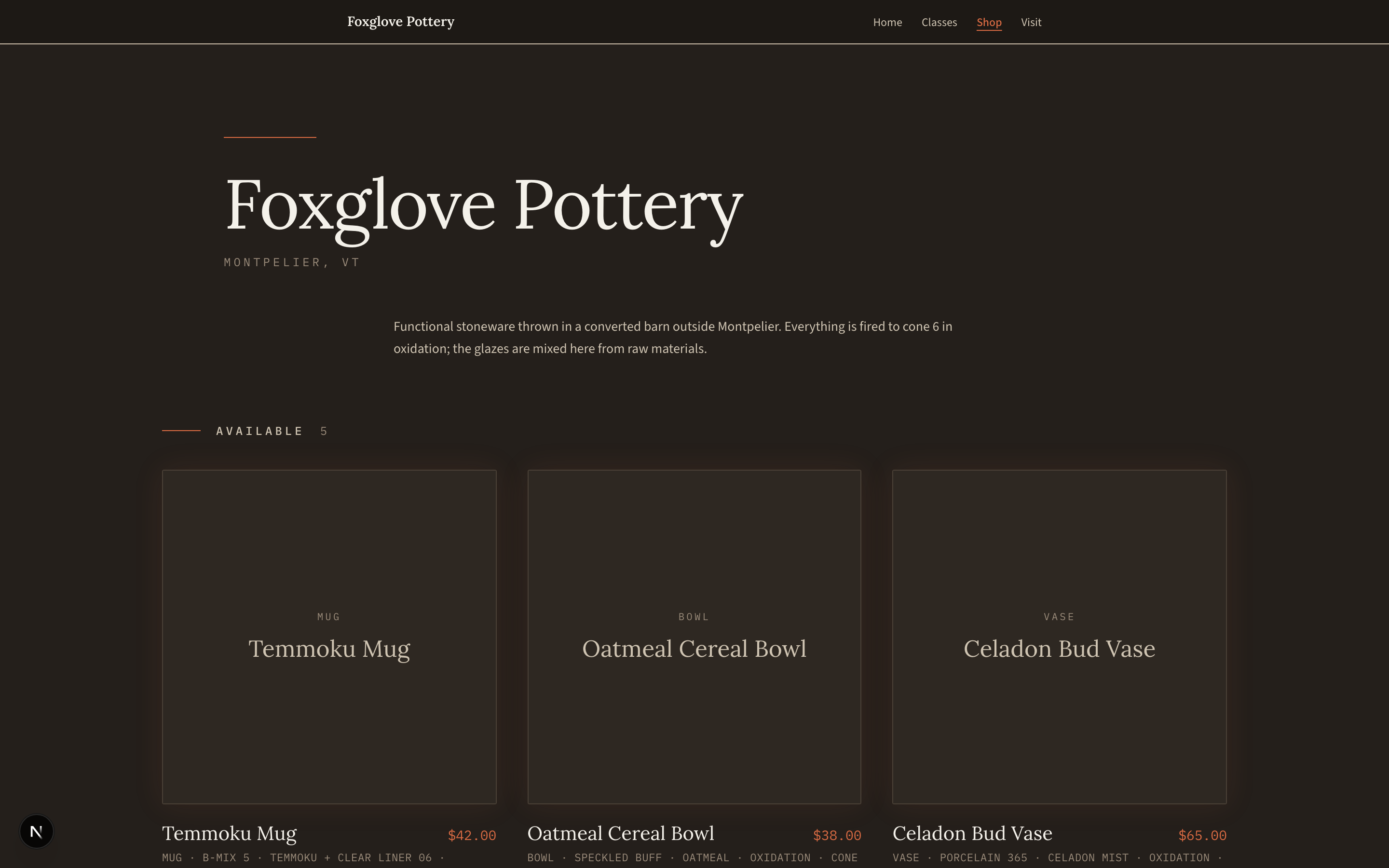
You’re already tracking every piece through production. When one comes off the shelf, it’s one tap from a finished listing — photo prompt, price, and the story already written. The store is the payoff of the planning you’re doing anyway, not another data-entry chore.
The story is the product
Every piece sells with its own history.
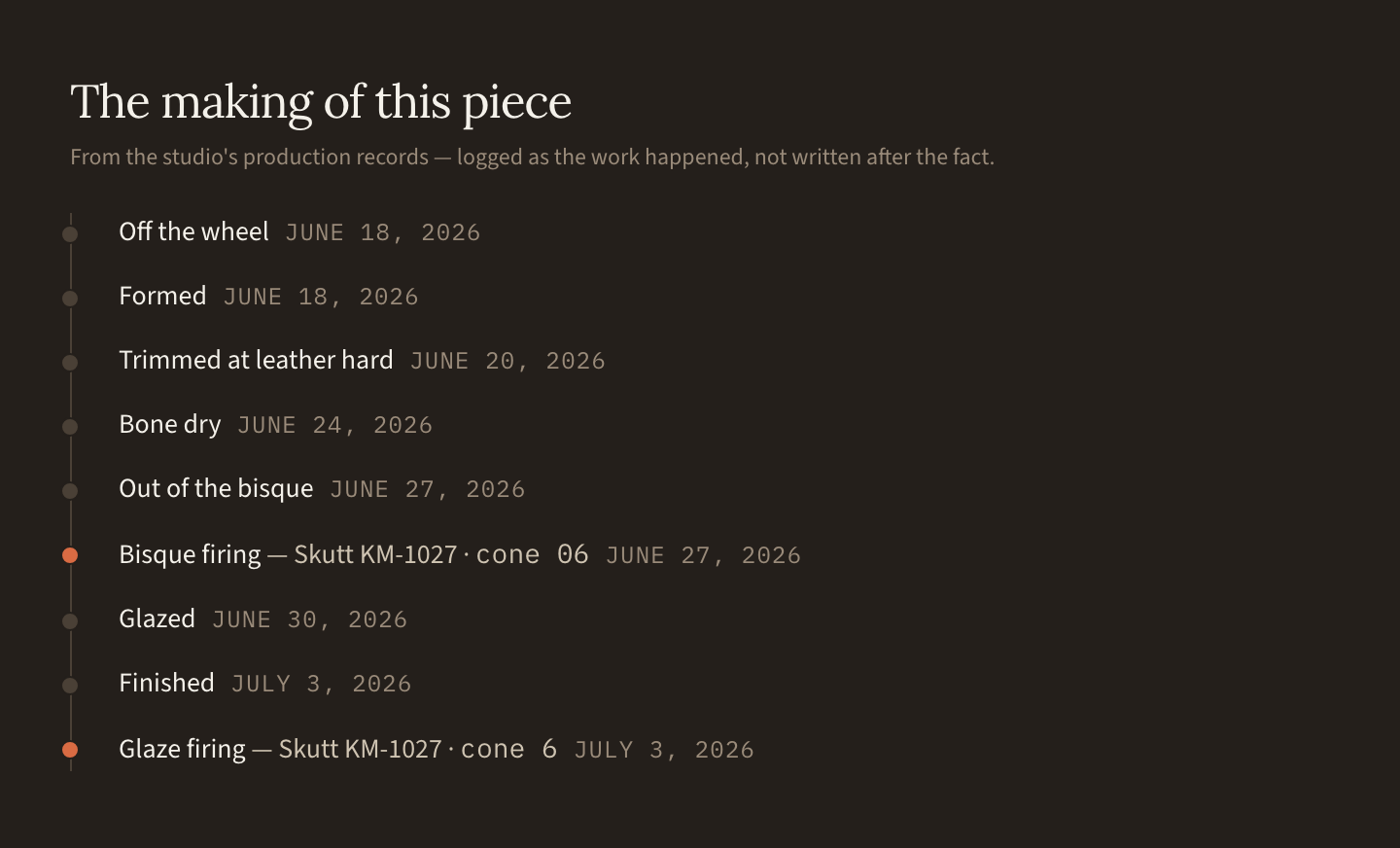
Because Claybench logs each stage as it happens, a finished mug already knows it was thrown from a named clay body, glazed with a specific recipe, and fired to cone 6 on a real date. That provenance ships with the listing, pre-written — a story no marketplace can fake and no generalist tool can assemble.
How it works
A real store, fed by your real production.
Auto-listing from the shelf
Mark a finished piece available and it becomes a draft listing — inventory accurate because it flows straight from the production pipeline, never re-typed.
Retail POS for in person
Sell at the craft fair or the studio door with an in-person register (Stripe Terminal). The same inventory, whether it sells online or across the table.
Search buyers can't get elsewhere
Shoppers browse by glaze type, clay body, firing method, and color — domain-specific filters a generic store can’t offer.
0% platform fee
We don’t take a cut of your sales.
No platform fee on sales through your own traffic — just card processing, the same as Squarespace, and far below Etsy’s 9–13%. The storefront’s job is to save you the labor no generalist tool saves, not to skim your margin.
Let your production build your store.
Included from the Maker plan — $16/mo
Each plan contains the one below it — upgrading only ever adds.